
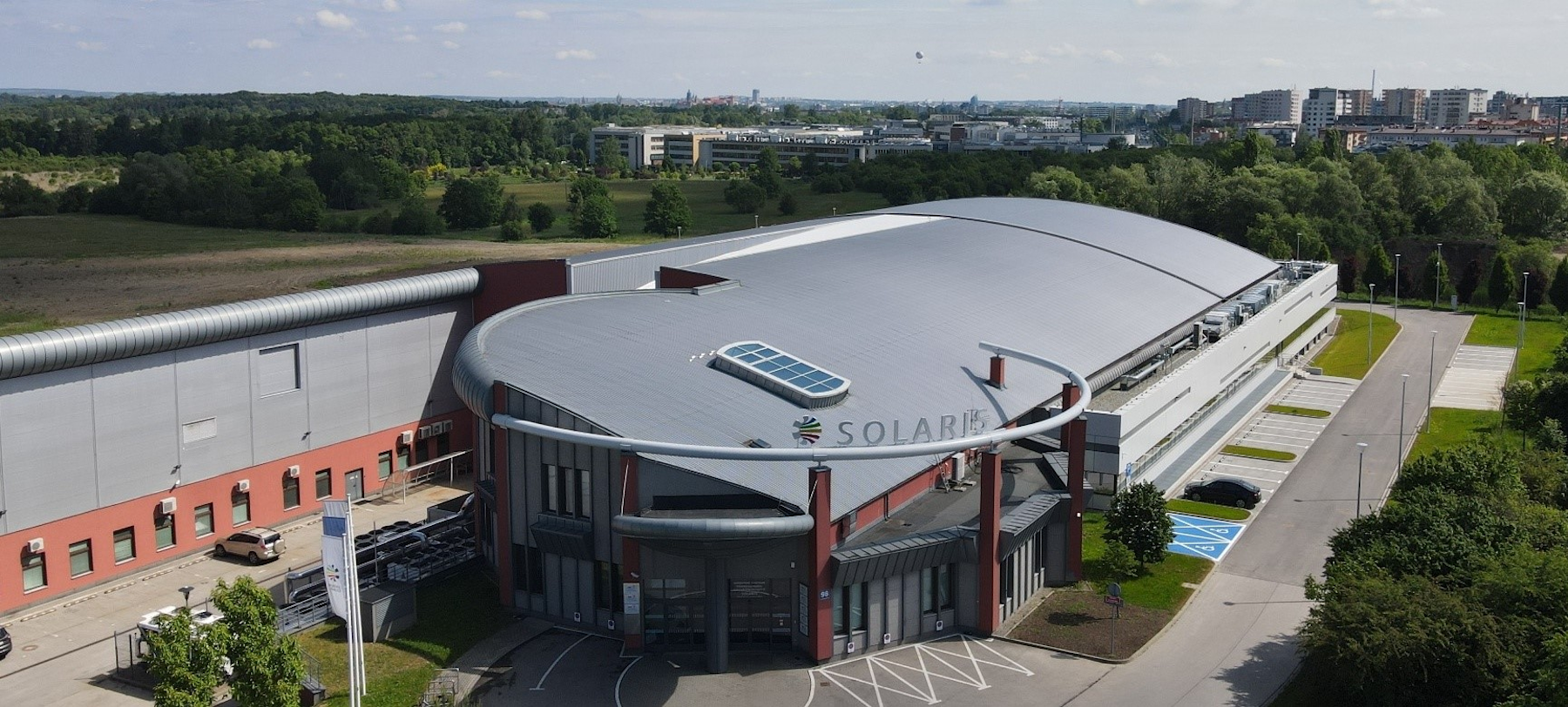
The SOLARIS National Synchrotron Radiation Centre, operated by the Jagiellonian University in Kraków, Poland, is one of the largest and most advanced multidisciplinary research infrastructures in Central and Eastern Europe. As a third-generation synchrotron light source, developed in collaboration with the MAX IV Laboratory in Lund, Sweden, SOLARIS provides high-brilliance synchrotron radiation for cutting-edge research in physics, chemistry, materials science, biology, medicine, nanotechnology, environmental sciences, and industrial innovation. Since the first operational experiments were launched, the facility has continuously expanded its scientific capabilities, offering access to state-of-the-art beamlines and advanced analytical platforms that support both fundamental and applied research. An external view of the SOLARIS accelerator is shown in Picture 1.
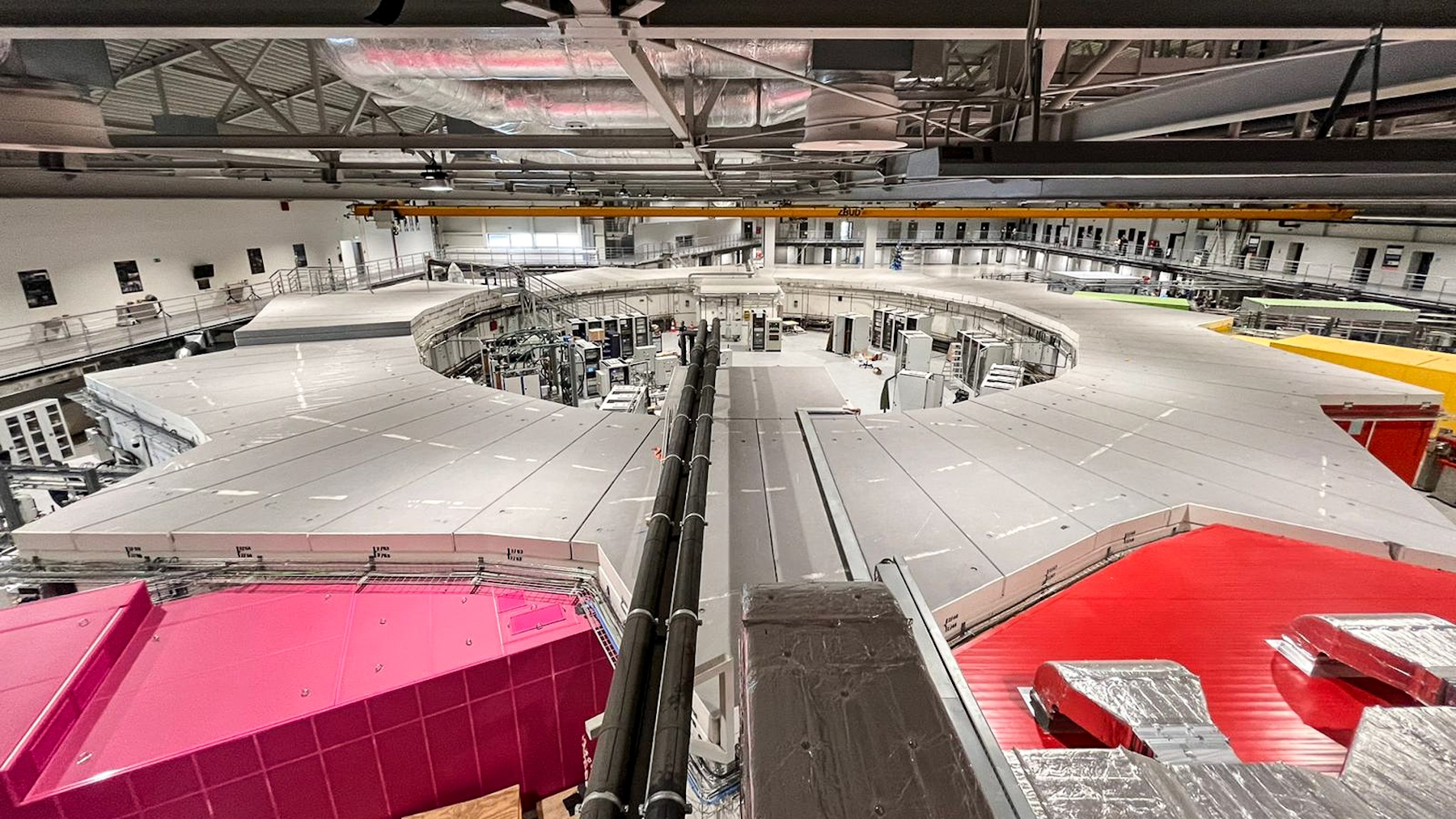
The SOLARIS accelerator complex operates at an electron energy of ~ 1.5 GeV and delivers stable, low-emittance synchrotron radiation across a broad spectral range, from vacuum ultraviolet through soft to hard X-rays. The facility currently hosts multiple experimental beamlines dedicated to techniques such as X-ray absorption spectroscopy (XAS), angle-resolved photoelectron spectroscopy (ARPES), X-ray microscopy, X-ray fluorescence imaging, microtomography, and multimodal spectroscopic characterization — all supported by the accelerator infrastructure shown in Picture 2. These capabilities enable detailed investigations of electronic structure, chemical composition, magnetic properties, crystallographic order, and nanoscale morphology in complex materials and biological systems.
A distinctive component of the SOLARIS research ecosystem is the integration of advanced cryogenic electron microscopy (cryo-EM) infrastructure, including high-end cryogenic transmission electron microscopy (cryo-TEM) platforms dedicated to structural and functional studies at near-atomic resolution. The cryo-EM facility complements synchrotron-based measurements by enabling correlative and multiscale characterization of biological macromolecules, soft matter, nanoparticles, catalytic systems, and hybrid functional materials under conditions close to their native environment. The combination of synchrotron radiation methods with cryo-EM approaches creates a powerful framework for comprehensive structural analysis, bridging spectroscopic sensitivity with real-space imaging at the nanometer and atomic scales.
This series of scientific articles presents selected research performed at the SOLARIS Centre and highlights the broad analytical potential of this infrastructure. The presented contributions demonstrate how advanced synchrotron and cryogenic microscopy techniques can be combined to address contemporary scientific challenges in the fields of energy-related materials, life sciences, catalysis, quantum materials, environmental studies, and innovative functional systems. Together, these studies illustrate the growing role of SOLARIS as a leading European platform for interdisciplinary, high-resolution, and multimodal scientific research.
 |
| Picture 1. External view of the SOLARIS National Synchrotron Radiation Centre in Kraków. |
 |
| Picture 2. The SOLARIS accelerator. |
dr hab. Marcin Klepka (Institute of Physics PAS)
dr hab. Jakub Szlachetko (The SOLARIS Centre)
Guest Editors
Published: 26.05.2026